‘How I Got Over’ Writer’s Block in the Age of AI

An “old school” image of writer’s block (a.k.a: Ever wondered what image comes up in a search for “writer’s block?” Credit: Unsplash)
In the dawn of the age of AI tools, writing an article or essay from scratch might seem old-fashioned or even rote for some, but after several months off, I wanted to start off with an old-school, artisanal article to relaunch my blogging efforts. To kick things off, I thought it would be interesting to explore a modern twist on an age-old problem: what does it mean to have writer’s (or creator’s) block in the age of AI-aided content creation.
‘Clock With No Hands’
The mixed blessing of today’s information age is that, on the one hand, it’s never been easier for one person to communicate their ideas, hopes, and vision to many. As the blogger revolution of the early 2000s and the rapid growth over the past decade in podcasters and influencers have proven, the need for massive technical infrastructure or financial resources to produce or publish content is no longer the barrier it was.
Yet, at the same time, it’s even harder to make a real connection. With so many places to consume information, audiences are far more fragmented than in decades past. Even for content producers focusing solely on social media as a distribution strategy, the choice of which social media channel can dramatically change who you reach (both organically and otherwise), a challenge amplified by the growing generational divide on where people get their news and information. Adding to that, customized information silos fed by AI have supercharged search and social media algorithms, making them the new gatekeepers.

“Americans spend an average of 5 hours and 16 minutes, per day on their phones” today. (Credit: Unsplash)
With an efficiency that editors, publishers, and broadcast executives of old could scarcely have imagined, today’s smart devices and the algorithms underneath the surface remove much of the element of chance in what content we see and when. Now, virtually no two computers, phones, or Google search results (even in the same household) see exactly the same thing. Even the constant deluge online of hot take and memes from political actors, established and aspiring influencers, and a sea of bots, can vary widely from one social media feed to another. The result is that while we be in our own media diet bubbles show that many around the US are exhausted with 65% of adults reporting, “the need to limit their media consumption about the government and politics due to information overload, fatigue, or similar reasons,” in a 2024 AP-NORC study.
When the president of the United States can post 160 times in a single late-night social media session, with any one of those driving much of the news and online conversation the next day, how can an average writer, content creator, or communicator keep up? When everything feels upside down, what’s worth saying anyway?
This was the central source of my writer’s (or blogger’s) block. As a small consolation prize, I knew, at least, that I wasn’t the only one struggling with struggling with this conundrum.
‘Don’t Say Nuthin’ ’
Since I launched my comms strategy practice last year, I’ve had the opportunity to work on communications and storytelling projects with a number of talented and thoughtful leaders, advocates, and communicators at mission-driven organizations around the US. This has provided a rich buffet of food for thought with transferable takeaways to share with others. Many of the insights from these projects or conversations translated easily into either a draft lede or an article “acorn” that I jotted down in my notebook.
However, despite my best intentions when I launched my blog last fall, I (quickly) found myself stuck on what to say at a time when so much information is constantly coming at all of us, and the world around us seems to be changing so quickly. Ideas just didn’t translate into words on the virtual page. An article idea from a conversation, article, or piece of new research that seemed relevant on a Tuesday morning all too often just didn’t feel relevant by the following afternoon. And as the months passed, my list of article ideas, insights to share, and storytelling acorns only continued to grow and grow. My published final blog count, not so much.
For me, this was paralyzing, resulting in an epic case of writer’s block. And as I searched unsuccessfully for a solution, my inner critic just grew louder and louder.

The technology may change, but the challenge of writer’s block spans the ages (Credit: Unsplash)
‘The OtherSide’
In the end, for me, I found the way forward didn’t come from leaning into strategies and tactics that had worked in the past, such as setting aside more time to write or seeking out a place free of distractions (besides a carefully selected writing playlist) to write. Instead, it came from a combination of making space for more conversation and re-applying values that are core to the foundation of how I aspire to work.
It's now a touch over a year since I officially launched my new social-impact shop (Evergreen Insights NW) as part of a not-quite mid-life, not-time-yet-for-retirement life “remix.” One of the benefits of launching my business has been greater flexibility in where and how I work. Another has been more flexibility in when I work, providing a chance to get off the constant 50-70-hour work week hamster wheel I’d been on since grad school. The two forces came into play as expected during the recent business trip and a planned “writing retreat” in Austin.
It’s often been said you can’t ever go back home. But I had the pleasure of joining a special April symposium at the Lyndon B. Johnson School of Public Affairs exploring the experiences of LBJ alumni in the worlds of energy and environment. My first official business trip since I launched Evergreen Insights, the goal was to pair the symposium with a mini-writing retreat to mark the first anniversary of the new business venture.
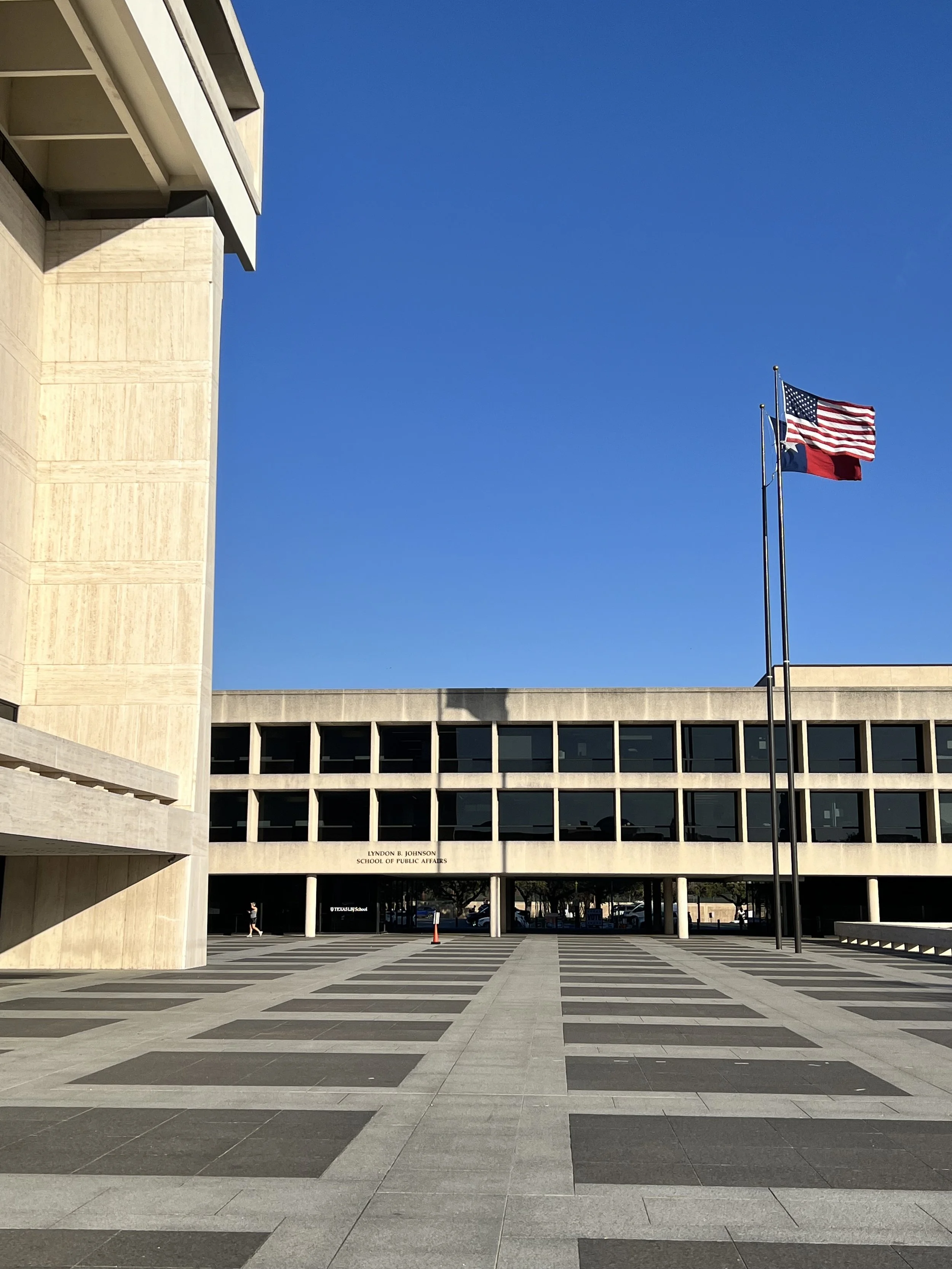
Sid Richardson Hall, home of the LBJ School, on a spring day (Credit: Burt Edwards © Evergreen Insights)
The goal was to use the time around the symposium as a writing retreat to translate the many ideas I had gathered over the past year into actual articles, either for my blog or freelance pitches. I had carefully planned to balance my time in Austin with plenty of time to prepare and attend the conference, with dedicated writing/creative days. I also budgeted a little time on the side for a couple of coffees with new colleagues and old professors. The symposium was a great experience, but the writing mini-writing retreat didn’t materialize as I had planned.
‘Game Theory’
As noted above, if there’s one constant I’ve heard over the past several years it’s the fear and uncertainty from community leaders and leaders at many mission-driven organizations at what to say and when. When everything is crisis and any statement could create a new one it’s difficult to know where to even start.
The result for many organizations and leaders has been to keep their heads down. And I get this, and in some cases it’s wise, as a short-term strategy. But when self-preservation becomes the primary and overriding lens for your communications and storytelling strategy deciding what you say, when you say it, and why, it can actually undermine your central mission and values.
When strategic silence moves from a tactic to a strategy it moves your organization from short term-survival mode into a longer-term bunker mentality that in some cases has no real end in sight. It can isolate and even alienate key members of your audience or community support base who looking for solidarity or words inspiration at a time of adversity are instead met with (un)strategic silence. And for many mission-driven organizations and individuals, in the long run, this approach can erode your organizational effectiveness by wearing down your staff who are constantly trying not to commit any unforced errors by overanalyzing every decision, move, or communication.
As a young LBJ student back-in-the-day, I never would have guessed how much of my career I’d spend working at mission-driven organizations facing a major crisis—natural, political, or other—central to their mission. The upside of this unexpected professional specialty I’ve developed is that I’ve been able to build a large set of tested strategies and tactics for effective, sustainable communications and community engagement when a crisis (or opportunity) strikes.
I recently had a new opportunity to translate some of these experiences into a project for a client to design and anchor an interactive webinar exploring how to develop sustainable, proactive communications strategies when every day seems like a new crisis. Our goal was to create a forum for communicators at partner organizations to explore how they could shift from comms strategies and tactics designed primarily to weather short-term storms to more sustainable strategies and systems when facing longer term crises where an end time frame is uncertain.
Our principal recommendation was to ground their communications and engagement strategy around the org’s core values and mission to decide what to say and when. We advised this always be paired with a values-based framework, grounded in your mission, to prioritize how and which audiences to engage at a time where many are feeling overwhelmed, alone, or under threat.
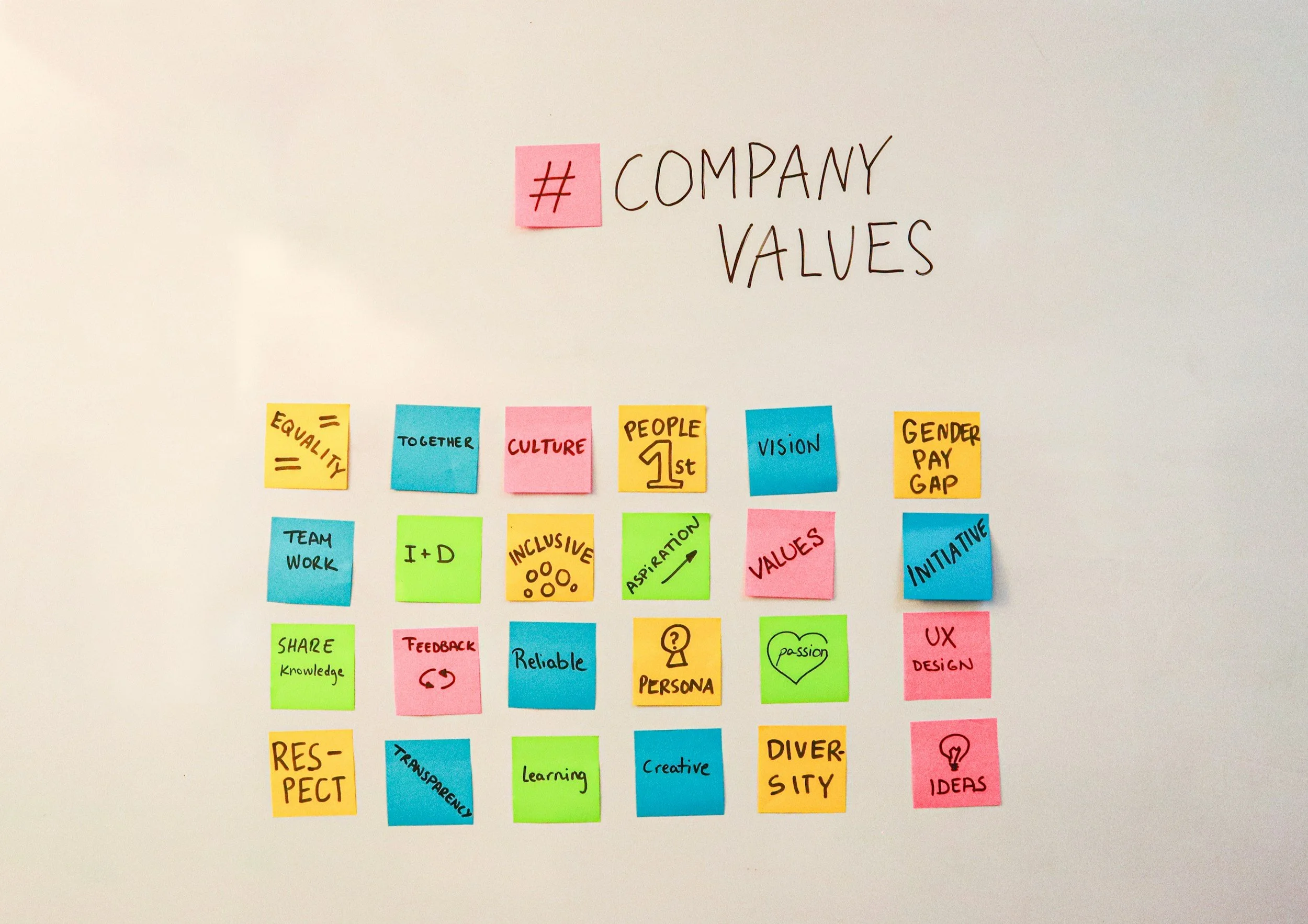
“Centering organizational values in your communications and storytelling strategy creates a clear, common framework for quickly making communications decisions.” (Credit: Unsplash)
Having a common and clear framework for making communications decisions in a time of crisis, or extended times of adversity, is essential. And centering organizational values in your communications and storytelling strategy creates a clear, common framework for quickly making communications decisions that support and not undermine your mission. It’s also a valuable system for leaders to measure the risk of when speaking out in a time of crisis is critical, a needless risk, or a distraction from other key challenges facing your organization or community.
It’s often easier to advise than to act. But my trip to Austin, and the conversations I had there, was the jolt needed to realize that applying a values-based strategy approach to my own communications challenge was the key to exiting my self-imposed prison of writer’s block.
‘The Tipping Point’
One of the core values I set for my recent life “remix” and work moving ahead is to re-prioritize in-person connection and be more present whether in conversations in IRL or online. When we have so many devices and ways to communicate with so many people, it’s easy to be everywhere and nowhere at the same time. So, while I had planned to use my time in Austin primarily for writing, after arriving and having an assortment of refreshing IRL conversations (some planned, some unexpected) I quickly realized that like any good remix, some improv on my Austin trip was in order.

A fun mural, deep in the heart of TX (Credit: Unsplash)
On my first day while exploring how Austin has grown and visiting some foodie spots of interest, I found myself having a series of unexpected, but interesting conversations in lines and coffee shops with other visitors and various resident Austinites. The life experiences, backgrounds, and perspectives varied. I also didn’t always agree, but everyone was very authentic and most of importantly it was always a conversation, even if a brief one, not a tirade. It was so refreshing to see people can still express themselves outside of digital memes or social-media hot takes.
Similarly, sharing coffee and insights on the ups and downs of communications today with the founder and owner of a small Austin-based comms social impact shop, during my second full-day in Austin, was invaluable. Our conversation about the shared challenges of creating regular, rewarding content echoed discussions I’d had with other communicators—including stories I’d heard during the recent workshop on crafting a proactive comms strategy at a time of a never-ending crisis. We also explored potential content development strategies—whether for writers, podcasters, or others—for moving forward grounded in values-based approach. A later conversation with an old advisor from graduate school also was a great chance to explore current challenges facing many leaders at mission driven organizations from a different perspective.
By mid-week it was clear to me that I wasn’t going to do as much writing as originally planned, but the mishmash of IRL conversations (some planned, some random) I had during my time in Austin proved invaluable in a different way. They reminded me of the commitment I’d made last year to reprioritize conversation and connection. They illustrated to me why my planned writing sessions had been well-intended in the short term, but the wrong choice for me in the longer-term. And provided a much-needed overall opportunity to take a step back, look at what I was try to do from a different perspective and realign my content development efforts with my core organizational values as a strategy to move forward.

“Instead of sequestering myself in my Airbnb or at an Austin coffee shop, I invested my time in conversations and exploring how Austin has changed since my days as a student, collecting insights and notes for future content.” (Credit: Unsplash)
‘The Next Movement’
In the end, my only regret now isn’t that I didn’t do more writing in Austin, it’s that I didn’t set-up more coffee and lunch conversations. Yes, I left Austin with notes for more articles than I have yet to write but I also finished this article in record time. And more importantly the writing and editing process never felt burdened by worries that it will be overtaken by other events.
Time will tell whether I can publish more consistently in the months ahead. But applying a values-based framework moving ahead for how and when I use this space to publish and share insights from others I see as a game changer. I’d also argue it’s the key for developing frameworks to effectively and authentically use AI tools as a writer, creator, and communicator working with and for mission-driven organizations. But that’s the topic for another blog in and of itself.
Burt Edwards has been editing and writing blogs longer than he’d care to admit and is managing editor for Evergreen Insight’s Issues & Insights blog. In his free time, he enjoys reading other blogs and articles online, listening to comedy podcasts, and exploring new restaurants and coffee shops around the PNW.
PS. I wanted to acknowledge a couple of resources and tools I used in writing and editing of this article. The first was generous doses of coffee from my local coffee shop here in Portland, Euko Coffee & Company. The second is I do use AI tools to assist in copy editing and proofing, including both Grammarly and Squarespace’s AI tools. AND last but not least, I found several DJ remixes online to be a great accompaniment to my writing and editing, including DJ Jazzy Jeff’s (4/10 & 4/8) Magnificent Lunch mixes and DJ MVP’s YouTube mixes.
PPS. I’ve always found titles and subhed titles challenging so a special hat tip to The Roots, as in a tribute to my remix concept I picked song and album titles for all of the subtitles in this article.