Looking Back, Looking Forward, & Exploring Lessons Learned Along the Way

Photo Credit: Unsplash
It’s been a crazy summer. June and July have just raced by. In fact, it’s hard to believe it's been just over a year since I first launched Evergreen Insights. I’ve learned a lot.
I’ve also had the opportunity to work on a mix of rewarding projects in partnership with remarkable organizations (both big and small) focused on civil rights, community power-building, and supporting vulnerable community members in times of need. And while I know there’s no shortage of articles, advice, and advisors on how to launch your own business, I thought it was important to take a moment and reflect on a couple of (quick) toplines of lessons learned so far along the way as knowledge sharing was one of the goals I had for my blog and business overall.
Lesson Learned #1: Fellow small business owners are a living library, brimming with wisdom just waiting to be discovered.
There’s never been more information at the fingertips for would-be entrepreneurs looking to launch their own business. One of the benefits of today’s Information Age is the easy access to data. I hesitate to use “knowledge” or “information,” as I think the everyday experience for many living in the US is more like swimming in a sea of data points and opinions, some informed and some very much not.
Like many, when I started mulling the idea of taking a break from the hamster wheel after working for over a decade in various communications leadership positions in the nonprofit community, Google was the first “advisor” I consulted. I found lots of useful articles and resources. But honestly, by far the most valuable resource was the library of (old-fashioned, human-centered) knowledge I tapped into within my own networks.
A constellation of old friends, classmates, and colleagues with experience launching their own small businesses, consulting practices, and creative ventures provided a rich human library of knowledge to tap into, which was very helpful and rewarding. In fact, I had several old friends who ended up serving as informal advisors (or a kitchen cabinet, so to speak) in my research and scoping phase, helping me consider a business structure, explore opportunities (and challenges) in building a sustainable business model, and mini-focus group and stress test ideas—including potential names and logos.
AI can be a great tool. But community is still an incredible asset for businesses, both young and old | Photo Credit: Unsplash
Lesson Learned # 2: AI can be a useful tool when applied thoughtfully and intentionally
Over the past year, I’ve spent a lot of time learning about how AI tools can be used in communications and public affairs for mission-driven organizations. At first, like many people, I was motivated by curiosity and a bit of FOMO after hearing so much about AI in the news and from others. But I was also encouraged by some advice on helpful AI tools for entrepreneurs I’d read about along with some helpful suggestions from others working in the communications and public affairs space.
So, I dove in. To get started, I turned to a few tools that an old friend from grad school, and a member of my informal kitchen cabinet, working in the tech world suggested. These tools helped me research possible niches and explore ideas for my brand.

AI can be a powerful tool to help in a brand process for small businesses and nonprofit organizations | Photo Credit: Unsplash
AI tools were especially useful for generating brand names and overcoming creative blocks. Even with all the technology we have now, it’s still all too easy to get stuck in your own head, a prisoner to your perspective. Playing around with an AI brand name tool helped me play and is actually how I first brainstormed the name “Evergreen Insights.” Later, I added “NW” to highlight how growing up in the Pacific Northwest shaped who I am, both personally and professionally. After picking a name, I used a few more AI tools to create my initial logo for launch and to choose a color scheme that fit and reinforce the brand I was building.
But weighing the strengths and suitability of each name and digging into domain possibilities for my online presence and email required some good old-fashioned legwork. While many AI tools claim to handle this, my experiments showed they often tripped up on the details that matter most. Research on availability to register a name, domain availability, and tests for potential brand confusion with other businesses are areas that are far too important to just outsource to AI tools. And like any brand building process I found mini-focusing grouping sessions and a lot of conversations with members of my kitchen cabinet, friends, and family were vital in settling a name.
In the end AI tools certainly played a vital role in my scoping and development phase. However, I found that drawing on my experience from leading a major PNW conservation group’s rebrand, along with earlier sub-branding projects I’d worked on over the years, was not only essential in my business scoping and brand identify building efforts but far more satisfying as well.
Lesson Learned # 3: Any day can be your Friday, but any day can be your Tuesday too
When I first started exploring the idea of a professional-personal life remix in the fall of 2024, one of the core issues was getting off the hamster wheel that all too many working professionals find themselves inescapably tied to today. Working for over two decades inside the Washington Beltway, I’d grown accustomed to long weeks and ever-increasing professional availability—as cell phones became smarter, Wi-Fi and broadband became better, and social media infused news cycles evolved into a constant 24/7 blizzard.
That said, the responsiveness modern information technology offers have opened up vital opportunities for almost every organization I’ve partnered with over the past 20 years. This includes the ability to play key community leadership roles at times of crisis or combat potentially dangerous mis-and dis-information. Yet, I also can’t ignore the personal toll the pressure of always being available takes on both staff and leaders in mission-driven spaces.
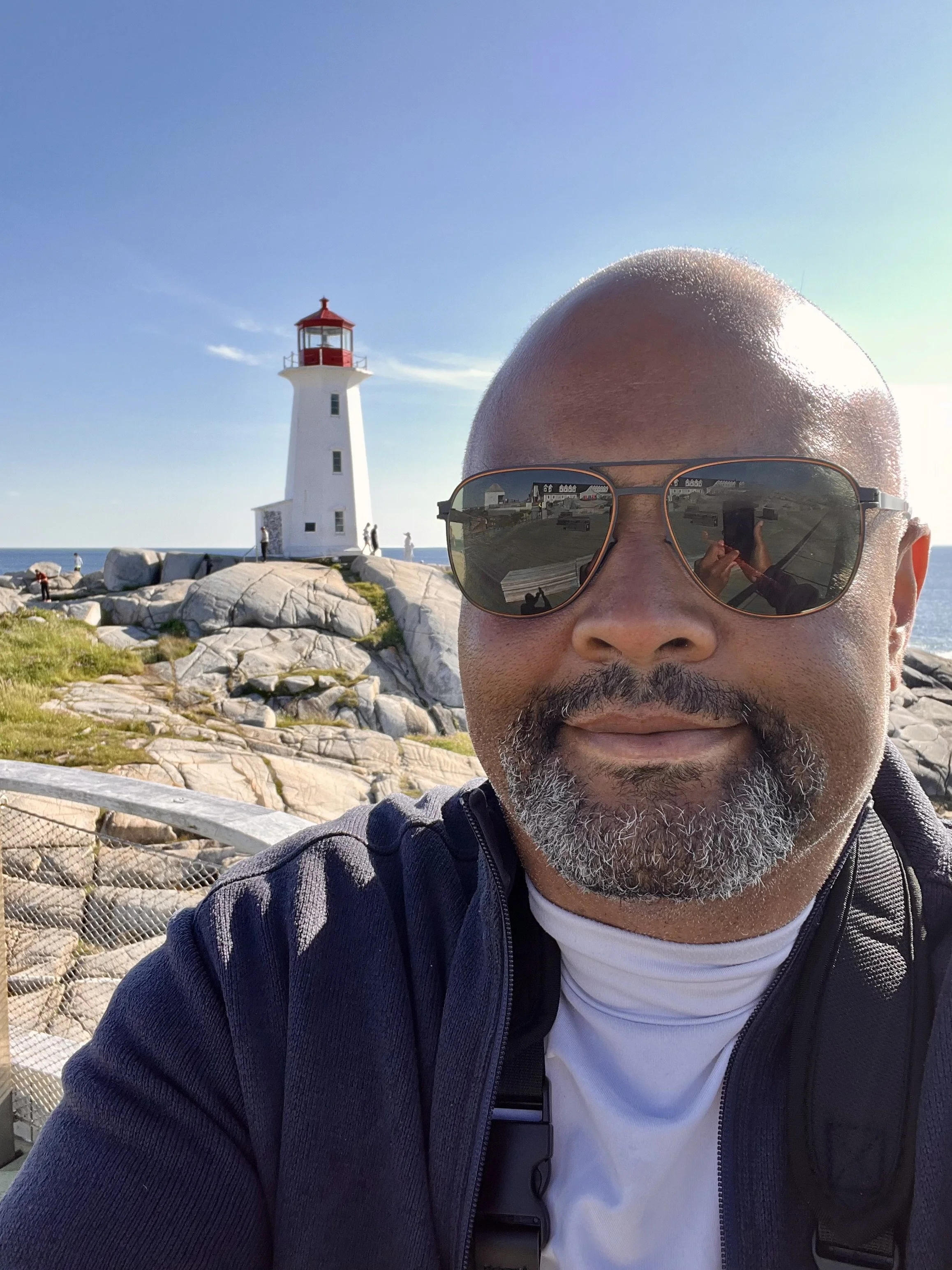
The literal end of the road, from Peggy’s Cove in Nova Scotia, Canada | Photo Credit: Burt Edwards © Evergreen Insights
Launching my own public affairs practice gave me the space and flexibility to take a multi-week trek across Canada last summer, something I’d talked about and thought about for years. It was also invaluable when I needed to suddenly travel for a death in the family last year and to help out with some elder care issues. But meeting clients' needs and deadlines, many of whom are often overworked, also means staying on your toes. I’ve learned that any day can feel like a Friday, but just as easily slip into the grind of a Tuesday or Wednesday. And with so many requests for deliverables in time for Monday or Tuesday deadlines, my weekends (more often than not) have transformed into unexpected project marathons.
But perhaps the biggest and most surprising challenge has been wrestling with the belief that I “should” be clocking 50-60+ hours each week. Even after formerly stepping off the nonprofit community hamster wheel, I’ve found my body still craves the familiar pace of the old routine. This has been a fascinating and ongoing lesson as I navigate the early days of building my own business and balance being responsive for my clients, colleagues, and partners.
Lesson Learned # 4: Be open to unconventional opportunities, but don’t forget work-life balance
Among my trusted circle of informal advisors, one debate stood out: should I weave “NW” into my business brand or not? Honestly, I found myself genuinely torn over the question as well.
On the one hand, I’d launched my “personal-professional remix” effort, in part, to work with more PNW- and Western-based mission-driven organizations, something I’d recently drifted away from in my recent professional work. On the other hand, I didn’t want to leave opportunity (or $$) on the table as a growing business, and as helping organizations doing good work wasn’t limited to the PNW. In the end, because focusing on values is important to how I communicate, and my process, I decided to show that the Pacific NW is where I live and where I mostly grew up—even though I’ve spent half my life on the East Coast and much of my career working in Washington, DC (with a side stop in Austin, Texas).

Seattle, WA on a great summer day | Photo Credit: Unsplash
Over the past year, I’ve worked with some local clients, doing great work here in the PNW to protect our natural treasures. I’ve also provided pro bono advice and assistance to several West Coast-based groups and individuals on several short-term projects. However, some of the most rewarding comms strategy and assistance projects I’ve worked on over the past year have been virtual with clients across the country. This included a successful pilot project to help a client roll out new scalable high-level communications strategy consulting efforts for a group of 12-15 organizations working on civil rights, community power building, and supporting vulnerable community members in times of need.
Lesson Learned # 5: Center your core business values in your approach, particularly when you hit bumps in the road
Helping mission-driven organizations build community power, advance ideas, amplify impact, and increase community wealth and well-being is at the core of what I founded Evergreen Insights to do. The rubber hit the road, however, when an opportunity to just that came up, but required shifting my hours (temporarily) ahead on some days to East Coast hours.
I’ll admit it was hard to “live” my mission statement values when I found myself having to be up and online by 6A Pacific on some mornings this past June to support a group of partners working to protect birthright citizenship. But it was also a great way to literally stress-test my commitment and resolve to a set of values I’d outlined for my communications practice during my early scoping and discovery phases.
A Year in the Life
It’s still hard to believe I’ve been a small business owner for a touch over a year. And it’s hard to believe summer 2026 is almost over.
I’m sure there will be more challenges in the coming months. I also know that the lessons I’ve learned, along with the relationships I’ve strengthened (both the old ones I’ve relied on and the new connections I've made with like-minded communications and public affairs firms), will be key to facing those challenges and discovering new opportunities.
Burt Edwards has been editing and writing blogs longer than he’d care to admit and is managing editor for Evergreen Insight’s Issues & Insights blog. In his free time, he enjoys reading other blogs and articles online, listening to comedy podcasts, and exploring new restaurants and coffee shops around the PNW